Thursday, July 18, 2019

Operating Session 9

Operating Session #9 took place on Thursday 7/18/2019.  I had 9 operators in addition to myself.  This was the largest crew I’ve had yet.  The conclusion is that 8 operators is a more optional crew size.  With 9 some people ended up waiting a while between trains.

The Digitrax duplex radio throttles generally worked well, although at the east end of East Yard the reception didn't seem to be the best.  A second UR92 radio receiver is probably a good idea for the future.

During the session I ran into a slot limitation problem with my DCC command station.  I’m still running off of a Digitrax Zephyr DCS50 command station.  It has 12 control slots, and somehow we ran out.  For a while it seemed like we could only have 6-7 throttles with a locomotive assigned to it.  When doing some research afterwards I discovered that if locomotives aren’t dispatched with all functions (including headlight) off, then the slot isn’t released.  Additionally, old consists defined in the system may be holding onto slots.  During the next session I plan on running the slot release procedure, and then have each operator make sure they turn off all functions before dispatching their locomotives.  Do note that the clearing procedure also wipes any consists you may have configured.  If that doesn’t do the trick then it is time to upgrade to a more capable command station.  I’m still a bit amazed that the oldest most basic Digitrax Zephyr has managed to do the job so far.


Here were the assignments for the session, Friday 9/11/1959:

  • 6:45am ATSF/P&E/C&IM/P&PU Dispatcher on duty.  Dan J, all day job.
  • 6:45am ATSF Pekin switcher on duty.  Greg B, all day job.
  • 7:00am PPU yard switcher on duty.  Kurt V, all day job.
  • 7:00am PE switcher on duty.  Frank S, all day job.
  • 7:00am ATSF#14 Eastward passenger from Pekin.  Peter A.
  • 7:00am PE Corn Products AM job.  Mike H.
  • 7:45am ATSF #47 Westward green fruit express from ATSF staging (Streator).  Bob M.
  • 8:15am ATSF Westward extra local freight from ATSF staging (Streator).  Mike A.
  • 10:00am ATSF #48 Eastward through-freight from East Yard.  Charlie S.
  • 10:15am CIM #6 Northward freight from CIM staging.  Peter A.
  • ~ 10:30am ATSF Eastward extra local freight from East Yard.  SEVERELY DELAYED DUE TO DELAYS FROM OPPOSING EXTRA.
  • 11:00am ATSF #17 Westward mail and express from ATSF staging (Streator).  Bill S.
  • ~ 11:00am PE American Distilling AM job.  Mike H.
  • 12:05pm PE #11 Westward passenger from PE staging (Bloomington).  Peter A.
  • 12:50pm PE #95 Westward freight from PE staging (Bloomington).  Mike A.
  • 1:00pm ATSF #18 Eastward mail and express from Pekin.  DELAYED 1HR.  Mike A.
  • 1:42pm TPW Westward coal extra from ATSF staging (Streator).  Peter A.
  • 2:15pm PE #12 Eastward passenger from Pekin.  Charlie S.
  • 3:05pm CIM #7 Southward freight from East Peoria.  Bill S.
  • 3:15pm ATSF #13 Westward passenger from ATSF staging (Streator).  Charlie S.
  • 3:30pm ATSF #50 Eastward way-freight from East Yard.  Delayed 1 hrs, Mike H.
  • Session ended 4pm.
  • 4:30pm PE #90 Eastward freight from East Peoria.  Run after session.
  • 4:45pm ATSF #49 Westward way-freight from ATSF staging (Streator).  Run after session.

Train orders issued during the session:
  1. To: No 14, No 47.  Body: No 14 Meet No 47 in Roanoke.  No 47 take siding in Roanoke.  Complete: 6:40am.
  2. To: x707W.  Body: After No 14 arrives in Streator engine 707 run extra Streator to East Yard.  Complete: 7:30am.
  3. To: x401W.  Body: TP&W engine 401 run extra Streator to East Peoria via Pekin Jct.  Complete: 1:05pm
  4. To: No 18, x401W.  No 18 run 1HR late.  Complete: 1:42pm
  5. To: No 13, No 50.  No 50 run 1HR late.  Complete: 3:30pm.


Sunday, March 3, 2019

Operating Session 8


Operating Session #8 took place on Sunday 3/3/2019, with a crew of 7 in addition to myself.  Overall the session went well and the layout worked well.

Here were the assignments for the session, Thursday September 10, 1959:

  • 6:45am ATSF/P&E/C&IM/P&PU Dispatcher on duty.  Dan J, all day job.
  • 6:45am ATSF Pekin switcher on duty.  Bob, all day job
  • 7:00am PPU yard switcher on duty.  Mike A, all day job.
  • 7:00am PE switcher on duty.  Rich S, all day job.
  • 7:00am ATSF#14 Eastward passenger from Pekin.  Charlie S.
  • 7:45am ATSF #47 Westward green fruit express from ATSF staging (Streator).  David M.
  • 8:30am ATSF Westward extra local freight from ATSF staging (Streator).  Mark V.
  • ~ 9:30am TPW Westward coal extra from ATSF staging (Streator).  Bill S.
  • 10:00am ATSF #48 Eastward through-freight from East Yard.  TRAIN RAN 1HR LATE.  Charlie S.  
  • 10:15am CIM #6 Northward freight from CIM staging.  David M.
  • ~ 10:30am ATSF Eastward extra local freight from East Yard.  TRAIN DID NOT RUN.
  • 11:00am ATSF #17 Westward mail and express from ATSF staging (Streator).  Bill S.
  • 12:05pm PE #11 Westward passenger from PE staging (Bloomington).  David M.
  • 12:50pm PE #95 Westward freight from PE staging (Bloomington).  David M.
  • 1:00pm ATSF #18 Eastward mail and express from Pekin.  Charlie S.
  • 2:15pm PE #12 Eastward passenger from Pekin.  Bill S.
  • 3:05pm CIM #7 Southward freight from East Peoria.  David M.
  • Session ended at 3:25pm
  • 3:15pm ATSF #13 Westward passenger from ATSF staging (Streator).  Run after session.
  • 3:30pm ATSF #50 Eastward way-freight from East Yard.  Run after session.
  • Optional ATSF #50 Eastward second section from East Yard.  Run after session.
  • 4:30pm PE #90 Eastward freight from East Peoria.  Run after session.
  • 4:45pm ATSF #49 Westward way-freight from ATSF staging (Streator).  Run after session.


Saturday, January 12, 2019

Thinking toward the next expansion

Lately I've been trying to focus on structures and scenery.  I'm currently working on Washington, IL and hoping to get it scenicked by the next operating session in February.  However, I have also been thinking toward the next expansion of the layout.  Phase 4 of the layout would involve cleaning out the workshop room which is current full of junk, and knocking down the wall between the layout room and the workshop.  I expect that this will take the layout out of action for months, so I'm not rushing to get started on this.

The goal of phase four would be to more accurately model the trackage rights on the TP&W by adding the town of Eureka on the TP&W, adding Streator junction, and adding the east TP&W staging.  This would allow for some TP&W traffic to run on the TP&W instead of only ATSF traffic.  Phase four would also move Roanoke to a different wall, and allow for the addition of an additional town on the ATSF.  Adding Benson, IL would be the most accurate location wise, but adding Minonk would likely be more interesting.  Phase four would also replace the current staging yard with a larger staging yard.

Here is what the layout currently looks like


Here is what the layout will likely look like after the phase 4 construction

Sunday, August 26, 2018

Operating Session 7 (Amrail)

Operating Session #7 took place on Saturday 8/25/2018.  This was my first time hosting the Amrail operating group.  We had six operators from Amrail, and two from my usual operating group to fill in the remaining spots.  The session went well and I look forward to hosting the Amrail crowd again.  Only one problem was reported by the operators, which was a problem with the couplers of one of the P&E Pekin switch engines.

Here were the assignments for the session, Tuesday September 8, 1959:

  • 6:45am ATSF/P&E/C&IM/P&PU Dispatcher on duty.  Dan J, all day job.
  • 6:45am ATSF Peking switcher on duty.  Rich S, all day job.
  • 7:00am PPU yard switcher on duty.  Greg B, all day job.
  • 7:00am PE Pekin switcher on duty.  Mike R, all day job.
  • 7:00am ATSF #14 Eastward passenger from Pekin.  Bill S.
  • 7:15am ATSF Eastward extra local freight from East YaRD.  Gary S.
  • 7:45am ATSF #47 Westward green fruit express from ATSF staging (Streator).  George S.
  • 8:30am ATSF Westward extra local freight from ATSF staging (Streator).  Charlie S.
  • 10:00am ATSF #48 Eastward through freight from East Yard.  Gary C.
  • 10:15am CIM #6 Northward freight from CIM staging.  George S.
  • 11:00 ATSF #17 Westward mail and express from ATSF staging (Streator).  Bill S.
  • 12:05 PE #11 Westward passenger from PE staging (Bloomington).  George S.
  • 12:50 PE #95 Westward freight from PE staging (Bloomington).  Gary C.
  • 1:00pm ATSF #18 Eastward mail and express from Pekin.  Gary S.
  • 1:10pm ATSF Westward coal extra from ATSF staging (Streator).  Bill S.
  • 2:15pm PE #12 Eastward passenger from Pekin.  George S.
  • 3:05pm CIM #7 Southward freight from East Peoria.  Greg B.
  • 3:15pm ATSF #13 Westward passenger from ATSF staging (Streator).  Charlie S.
  • 3:30pm ATSF #50 Eastward way-freight from East Yard.  George S.
  • 4:30pm PE #90.  Did not run before session end.
  • 4:45pm ATSF #49 Westward way-freight from ATSF staging (Streator).  Did not run before session end.

Monday, August 13, 2018

Operating Session 6

Operating Session #6 took place on Thursday 7/19/2018.  We had eight operators, plus myself acting as dispatcher.  This is the first time we've operated with a full eight person crew.  This is also the first time we managed to complete all the trains for the day.  Overall I feel the session went great, and the layout performed without problems.  For the future I will shoot for eight operators as the goal.  Being able to focus on dispatching and not having to also run a yard job was nice.  

Here is some of the operator feedback:

  • A couple of locomotives stalled on the road crossing on the siding in Roanoke.
  • The track map in Pekin industrial is inaccurate and American Distilling is missing from it entirely.  Additionally the car card boxes for American Distilling should be re-labeled to match the order of the tracks.
  • The IT and PRR interchanges in Morton clog up with cars.  The dispatcher might need to move some cars from the interchange tracks down to a storage box under the layout mid session.  There is unfortunately no room to make the tracks longer.


Here are some of the observations and lessons learned during this operating session:

  • While test running locomotives before the session the MRC sound decoder in one of the Kato F3A units died.  The decoder appears to be fully dead, also not responding to DC power.  MRC sound decoders are generally thought of as unreliable, and my track record of having 2 out of 3 of these sound decoders die confirms that.  The dead decoder will be replaced with a Digitrax non sound decoder for the time being.  This decoder death makes me wonder if I'm getting voltage spikes on the layout.  I will install snubbers at the end of each power district to absorb spikes.
  • A few locomotives stalled in the staging yard.  Currently the yard does not have power feeders due to it originally having been built as a temporary staging yard.  Temporary things sometimes become permanent.  It is time to extend the power bus and run feeders to each staging track instead of relying on track power through 15ft of code 55 track.
  • The Corn Products and American Distilling switch jobs performed by the P&E Pekin yard switcher can tie that operator up for too long.  I will create instructions for these as stand alone jobs, and suggest that the P&E Pekin yard switcher call in crews to operate those switch jobs separately.
  • Switching Morton continues to tie up the locals for a long time, causing some complications for meets.  I should consider if Morton needs to have a permanent switch job.


Here were the assignments for the session, Monday September 7, 1959:

  • 6:45am ATSF/P&E/C&IM/P&PU Dispatcher.  Dan J, all day job.
  • 6:45am ATSF Pekin switcher on duty.  Frank S, all day job.
  • 7:00am PPU yard switcher on duty.  Art J, all day job.
  • 7:00am PE switcher on duty.  Michael H, all day job.
  • 7:00am ATSF#14 Eastward passenger from Pekin.  Mike A.
  • 7:20am ATSF Eastward extra coal empty from East Yard.  Bob M.
  • 7:40am ATSF Eastward extra local freight from East Yard.  Bill S.
  • 7:45am ATSF #47 Westward green fruit express from ATSF staging (Streator).  Charlie S.
  • ~ 9:00am ATSF Westward extra local freight from ATSF staging (Streator).  Kurt V.
  • 10:00am ATSF #48 Eastward through-freight from East Yard.  Bob M.
  • 10:15am CIM #6 Northward freight from CIM staging.  Charlie S.
  • 11:00am ATSF #17 Westward mail and express from ATSF staging (Streator).  Mike A.
  • 12:05pm PE #11 Westward passenger from PE staging (Bloomington).  Charlie S.
  • 12:50pm PE #95 Westward freight from PE staging (Bloomington).  Mike A.
  • 1:00pm ATSF #18 Eastward mail and express from Pekin.  Bob M.
  • 2:15pm PE #12 Eastward passenger from Pekin.  Kurt V.
  • 3:05pm CIM #7 Southward freight from East Peoria.  Dan J.
  • 3:15pm ATSF #13 Westward passenger from ATSF staging (Streator).  Charlie S.
  • 3:30pm ATSF #50 Eastward way-freight from East Yard.  Bob M.
  • 4:30pm PE #90.  Mike A.
  • 4:45pm ATSF #49 Westward way-freight from ATSF staging (Streator).  Mike A.


PPU yard switcher switches the yard, while the P&E switches Corn Products in Pekin.
ATSF Eastward extra local freight waits for ATSF #47, the Green Fruit Express, to pull into the arrival track in East Yard.

Tuesday, July 10, 2018

Operating Extra 2101 East

As is often the case, during Op Session 5 there were too many eastbound freight cars in Pekin at the end of the day for #50 to haul, requiring us to call an extra train.  Today we will follow the operation of extra train 2101 east, which will handle local work in Morton, Crandall, Washington, and Roanoke, along with a few cars bound for staging (Streator).

As an extra train, extra 2101 east has lower priority than any 1st or 2nd class train on the schedule.  We receive our clearance card and train orders from the dispatcher at 3:40pm.  We have one train order, #5, which reads "Eng 2101 run extra east yard to Streator".  This is about as simple as train orders get, with no time restrictions and no mention of other extras.  We only have to worry about dodging scheduled trains.

Clearance Form A, indicating we have one train order, #5.
Train order #5, authorizing us to run extra from East Yard in Pekin, IL to Streator, IL.

We look at the timetable to determine what trains we need to stay out of the way of. 
ATSF Pekin branch timetable


Looking at the eastward register at East Yard we see that all departing trains have already left, with the latest one, #50, having left just 10 minutes ago at 3:30pm.
Eastward register at East Yard in Pekin, IL.


Looking at the westward register (not pictured) we see that two scheduled trains, #13 and #49, have not yet arrived.  #13 is scheduled to arrive in Pekin at 4:15pm, leaving the previous town, Morton, at 4:00pm.  With it now being 3:45pm there is no way we can complete a brake test and make it to Morton in time.  So we must wait for #13 to go past East Yard.  We'll use the time to review our car cards and write up our switch list for the local work that needs to go on along the route.
Paperwork for extra 2101 east.  Car cards, Clerance form A, train order, and switchlist
Extra 2101 east, with 9 cars, waiting on the departure track at East Yard in Pekin, IL.


The Pekin Chief #13 rolls through East Yard at 4:12pm, just in time for a 4:15pm arrival in Pekin.
The Pekin Chief #13 rolls through East Yard


Looking at the timetable we see that the next scheduled train, #49, isn't scheduled to arrive at East Yard until 6:20pm, and leaving the previous town of Morton at 6:00pm.  This gives us plenty of time to get to Morton and do some work.  We depart East Yard toward Morton at 4:15pm.  We sign the register with our information: Train x2101 east, engine 2101, white flags (indicating extra), train order #5, departing 4:15pm, 9 cars, conductor DGJ.
We add our train to the eastaward register at East Yard in Pekin, IL as we depart.


We arrive in Morton at 4:30pm, and as the lower priority train we take the siding.
Taking the siding in Morton, IL

We still have time to do some switching before needing to clear the main for #49.  Looking at our switchlist we have 5 deliveries in Morton.

  • CIM 11018 with coal for Libby McNeil.
  • FGEX 35288 empty for Libby McNeil.
  • WM 7020 TOFC for the TOFC ramp.
  • ATSF 89989 TOFC for the TOFC ramp.
  • NYC 436643 with parts for Morton Meyer.
We then have 2 pickups and 1 move in Morton.  
  • PRR 19103 from Morton Meyer with parts for the Illinois Terminal interchange in Morton.
  • AESX 195 from Illinois Terminal interchange with corn syrup for ATSF staging.
  • MILW 50105 from Libby McNeill with canned pumpkin for ATSF staging.
We use the card sorting shelf to help visualize the work that needs to occur, and update our switchlist.
Sorting car cards to determine work that needs to take place in Morton

Updated switchlist


We end up having to pull and shuffle several cars from Libby McNeill to get our newly delivered cars to the right spots.
Switching Libby McNeill cannery in Morton, IL.


Next we deliver the trailers to the TOFC ramp.
Morton had a TOFC ramp that saw a fair bit of traffic.


At 5:40pm we head back to the siding to clear the main for #49, which is scheduled to arrive at Morton at 6:00pm.  At 6:10pm #49 arrives.  With no pickups or deliveries in Morton, #49 quickly gets moving towards East Yard.
#49 rolls through town as we wait in the siding.


It is 6:20pm and we are delivering a boxcar to Morton Meyer.  Next we deliver a boxcar to the Pennsylvania Railroad interchange, and pickup a tank car from the Illinois Terminal interchange.
Working the IT and PRR interchanges in Morton.  After 1955 the IT ran on the PRR's line through town after abandoning their own trackage running down the middle of a nearby parallel street.


At 7:10pm we have our train coupled up, brake tested, and ready to depart for Washington.  With there being no more scheduled trains for the day, and no train orders received notifying us of other extra trains on the line, we can safely head to Washington.
Extra 2101 east ready to depart Morton, IL


At 7:30pm we arrive in Washington.  We have one pickup.
Arriving in Washington, IL.

At 7:43pm we depart Washington.

At 7:50pm we enter trackage rights on the Toledo Peoria & Western at Pekin Jct.

At 8:15pm we arrive in Roanoke.  We take the main as we know that no scheduled trains remain today, and have received no train orders informing us of extra trains.  We inspect car cards to update our switchlist.
Inspecting car cards in Roanoke, IL.


We have 3 deliveries in Roanoke.
  • ATSF 31595 with dried distillers grains for Eureka Milling.
  • ATSF 148595 with wheat middlings for Eureka Milling.
  • CIM 11047 with coal for Roanoke Farmers Co-op.

We have 1 pickup in Roanoke.
  • NKP 8081 from Prairie Dehydrating with bagged alfalfa feed for ATSF staging.
Picking up NKP 8081 loaded with bagged alfalfa feed pellets at Prairie Dehydrating.


Main street in Roanoke crosses the railroad.  We have to break the train to avoid blocking traffic while we switch the town.
Main street crossing in Roanoke, IL


At 8:55pm we have completed our switching in Roanoke, have coupled back up, and brake test is completed.  We depart for staging and terminate there.


As can be seen from our switchlist we delivered 10 cars, and entered ATSF staging with 5 cars in our train.
Switchlist at the end of our run. 10 delivered cars, and 5 cars still on the train as we entered staging.


Wednesday, May 16, 2018

Motive power on the Pekin branch

In an effort to learn more about operations on the ATSF Pekin branch I've been digging through old clearance cards and train orders from the branch. In doing so I was able to get a glimpse of what motive power was being used over the years.

  • 6/23/1948: No 47, engine 3268 Baldwin 2-8-2 Class 3160 (external picture)
  • 6/29/1951: No 47, engine 2606 Baldwin DT-6-6-2000 (external link)
  • 7/17/1951: Extra 100 west, engine 100 (external picture) EMD FT-A
  • 6/7/1952: Work extra 1933, weed burner (external picture) 1933
  • 9/15/1956: Engine 176 EMD FT-A
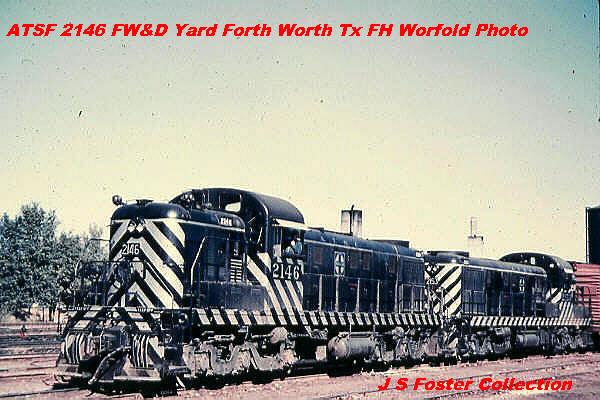
  • 12/6/1956: Engine 2111 Alco RSD-5 (external picture)
  • 12/10/1956: Engine 2157 (external picture) Alco RSD-5
  • 12/25/1956: Engine 2111 Alco RSD-5
  • 12/27/1956: Engine 2111 Alco RSD-5
  • 1/4/1958: No 47, engine 2157 Alco RSD-5
  • 1/4/1958: No 48, engine 2111 Alco RSD-5
  • 5/27/1958: No 47, engine 2111 Alco RSD-5
  • 5/27/1958: No 48, engine 2157 Alco RSD-5
  • 6/15/1960: No 47, engine 2800 EMD GP-7 (external picture)
  • 6/15/1960: No 48, engine 2819 EMD GP-7
  • 11/8/1960: No 47, engine 2800 EMD GP-7
  • 11/8/1960: No 48, engine 2823 EMD GP-7
  • 2/13/1962: Rail detector 9171
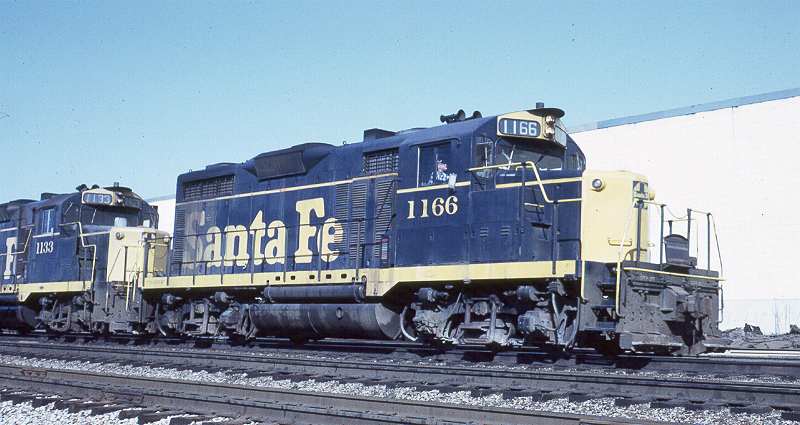
  • 11/24/1962: No 48, engine 1154 EMD GP-20 (external picture)
  • 6/9/1964: No 47, engine 1140 EMD GP-20
  • 10/9/1964: No 47, engine 1130 EMD GP-20
  • 10/14/1964: No 47, engine 1110 EMD GP-20
  • 10/15/1964: No 47, engine 1130 EMD GP-20
  • 10/16/1964: No 47, engine 1110 EMD GP-20
  • 10/26/1964: Extra 1120 west, engine 1120 EMD GP-20
  • 10/14/1968: Extra 1146 west, engine 1146 EMD GP-20
  • 1/29/1971: Engine 1151 EMD GP-20
  • 1/29/1971: Engine 1152 EMD GP-20
  • 2/4/1971: Engine 1151 EMD GP-20
  • 2/4/1971: Engine 1152 EMD GP-20
  • 1/22/1981: Extra 3701 west, engine 3701 EMD GP-39-2 (external picture)
  • 3/16/1983: Extra 3541 west, engine 3541 EMD GP-38 (external picture)
  • 3/21/1983: Extra 3065 west, engine 3065 (external picture) EMD GP-20U
On the layout I'm modeling the fall of 1959.  The realism of my current set of motive power is constrained by what is available in n-scale.  I'm currently using RSD-5s, GP-9s, and F-7s for freight power, and a mix of F-3s and F-7s for passenger power.